
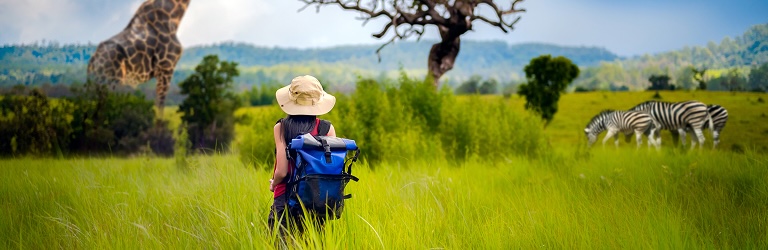
Your next holiday could save a species
South Africa holds a disproportionate share of the planet's biodiversity. It also holds a model for protecting it that no government subsidy has been able to replicate. The engine is travel. The question is whether you're using it wisely.
South Africa is one of only 18 megadiverse countries on Earth – nations that together contain 70% of all known biodiversity on the planet. It has 858 bird species, 299 mammal species, and ecosystems that exist nowhere else. It also has a conservation funding model that is almost entirely dependent on one thing: visitors choosing where to stay.
Lodge fees pay ranger salaries and anti-poaching patrols. Visitor fees fund marine biologists and whale monitoring programmes that protect a UNESCO-recognised wilderness. At Chobe in Botswana, safari revenues finance electric infrastructure and community development across the surrounding villages. The uncomfortable arithmetic: when travellers stop coming, rangers lose jobs, anti-poaching units lose funding, and wildlife loses protection.
The high-value, low-volume principle
South Africa's ecotourism sector generated nearly R73 billion in revenue in 2023. By 2030, that figure is projected to reach over R190 billion – a compound annual growth rate of 14.8%, making it one of the fastest-growing segments in African travel. This is not a niche market finding its feet. It is a mature, expanding industry with established funding models, transparent revenue structures, and a three-decade track record.
The birthplace of southern African ecotourism pioneered the model that now defines the industry. Premium pricing directly funds ranger salaries, habitat management and anti-poaching patrols. The logic is deliberately counterintuitive: one guest at premium rate funds more conservation than 10 guests at budget price, with significantly less ecosystem disruption. It's an investment framework that private clients will recognise immediately.
At the ocean destinations, visitor revenue sustains marine biology programmes. The whale season runs from June to November, drawing southern right whales to one of the world's most important calving grounds. Without visitor income, those programmes end.
Conservation at every price point
Conservation travel does not require a luxury budget. Meaningful wildlife experiences are available at every price point, from day safaris under R2 000 to Eastern Cape community lodges from R800 per night. Budget ecotourism in South Africa has matured significantly – affordable conservation travel is no longer a compromise; it is a credible alternative with verifiable impact.
Community-owned conservation lodges represent one of the most direct funding models in African ecotourism. In South Africa, community-led tourism initiatives in areas like the Eastern Cape and Knysna channel visitor revenue into local employment, rural livelihoods, and conservation programmes simultaneously. Township tourism is increasingly recognised not as a peripheral experience, but as a legitimate and impactful conservation funding mechanism.
The range of conservation experiences available to South African travellers spans day-trip game reserves near Cape Town, overnight stays at community-run lodges, and visits to active wildlife rehabilitation centres. Family ecotourism in South Africa has grown particularly rapidly, with properties offering Big Five encounters, conservation education, and behind-the-scenes access to wildlife care programmes – all structured to fund the work visitors come to witness.
Greenwashing versus genuine impact
The growth of ecotourism has produced a parallel industry in green credentials that don't hold up to scrutiny. Authentic conservation destinations share identifiable characteristics: UNESCO or equivalent accreditation, transparent revenue models that show exactly where money goes, visible conservation programmes with long-term track records, meaningful community employment, and deliberately limited guest numbers.
Properties that cannot demonstrate these markers – regardless of how their marketing reads – are not conservation partners.
Where your advisor adds value
Standard Bank Travel’s offering delivers real, measurable savings for clients and their families, starting with exclusive airline discounts accessible directly through the Standard Bank App. Whether you're planning a weekend escape to the Garden Route, a family holiday in the Kruger lowveld, or a quick business trip to Johannesburg, the app puts discounted fares within reach for every domestic destination across South Africa.
The savings extend beyond the ticket price. Standard Bank Travel benefits are designed to reduce the total cost of your journey, from flights to accommodation, so that more of your budget goes toward the experience itself, not the logistics of getting there.
Book through the Standard Bank App and unlock preferential airline rates for you and your family. Log on to the App and add the Standard Bank Travel tile to start. Maximise your travel benefits, and discover how far your money can take you, wherever the world calls.